Supporting Blue pt.2
A Science-Based Approach to Chow-Chow Health by Mark E. Humphries, Owner of EHRGwww.ellisrecoverygroup.com
Blue: Strength, Structure, and Understanding
Blue was never meant to be managed; he was meant to be understood. From the start, his journey has been about more than rescue; it has centered on learning to listen to a dog whose body, mind, and history require intention. Like many Chow-influenced dogs, Blue possesses both strength and sensitivityna blend that does not respond well to force, but flourishes with structure, consistency, and care.
At Helping Paws, we believe “bringing a dog home is a commitment, and honoring that commitment means learning the dog in front of you.”
Building Strength Through Structure
Blue’s care is anchored in daily routines that promote long-term health, mobility, and function. Due to his predisposition to hip dysplasia, his routine incorporates chiropractic care to maintain alignment and joint integrity, targeted joint supplementation such as Cosequin, and controlled, consistent movement. Research supports the idea that maintaining a lean body condition, combined with regular low-impact activity, is vital in slowing the progression of orthopedic disease (Merck Veterinary Manual, 2024).
For Blue, movement is his rhythm. Even on lighter days, we aim for a minimum of 7,500 steps to support circulation, joint lubrication, and neuromuscular balance.
His nutrition is a careful balance between scientific guidance and lived experience. Using an 80/20 model, 80% fresh, whole foods and 20% high-quality kibble, his diet is designed to support:
Joint health and mobility
Muscle tone and recovery
Emotional regulation through stable energy levels
Shared accountability, his health strengthens mine
Whole foods (e.g., lean protein, sweet potato) offer bioavailable nutrients and natural anti-inflammatory benefits, while kibble ensures nutritional completeness and consistency in accordance with WSAVA guidelines.
Service Through Socialization
Blue’s role as a service dog goes beyond task execution. He is purposefully socialized within families working with high-anxiety or reactive dogs. This serves two important purposes:
Reinforces his ability to remain regulated in complex environments
Provides other dogs with exposure to calm, structured behavior
Blue is a stabilizer, reflecting on a core Helping Paws principle: “Dogs don’t just adapt to environments—they shape them.”
Understanding the Chow Within
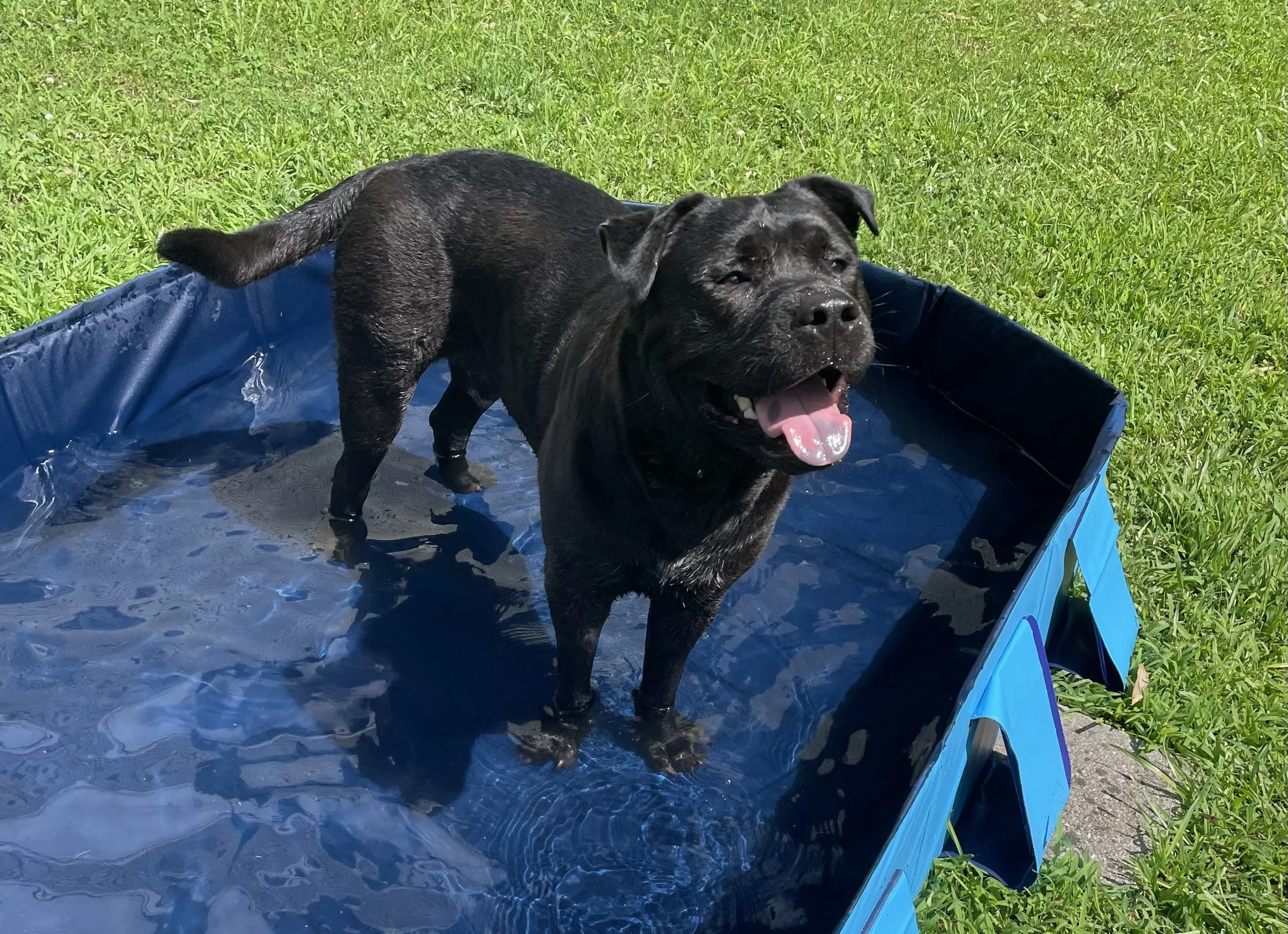
Blue Pool Day, Blue Moon, Summer, 2025, Georgia.
Although Blue is a mixed breed, his Chow Chow heritage is clear in both his structure and temperament. Chow-influenced dogs are often:
Structurally powerful
Emotionally discerning
Selectively social
Sensitive to overstimulation
Without proper understanding, these traits are often mistaken for stubbornness, aloofness, or resistance. In truth, they are expressions of boundaries and internal regulation. At Helping Paws, we do not try to override temperament; we build around it. This includes predictable routines, calm and consistent leadership, avoiding forced socialization, and respecting processing time.
Current veterinary understanding supports that chronic stress affects immune function, skin health, and inflammatory pathways, emphasizing that emotional regulation is not just behavioral—it is physiological (Merck Veterinary Manual, n.d.).
Managing Risk Through Awareness
Blue’s care is guided by a proactive approach to breed-linked health risks. Instead of reacting to problems, we build systems to reduce their likelihood and severity. The main areas of focus include:
Orthopedic Health
Maintained through lean body condition, daily controlled movement, chiropractic care, and joint supplementation.
Dermatologic Sensitivity
Supported through whole-food nutrition, anti-inflammatory inputs, and routine skin monitoring.
Endocrine Considerations
Monitored through awareness of early signs of hypothyroidism and regular veterinary evaluation.
Environmental Adaptation
Managed through routine stability, gradual exposure to environmental changes, and climate awareness.
DNA as a Commitment to Knowing
Understanding a dog’s genetic profile shifts care from reactive to intentional stewardship. DNA insight allows us to:
Anticipate joint vulnerabilities
Adjust nutrition proactively
Tailor exercise and workload
Respect behavioral tendencies
Within the Helping Paws model, DNA is not seen as a limitation—it is viewed as preparation. It becomes part of a long-term commitment to knowing the dog rather than controlling it.
A Life Lived Well
Blue’s life is not defined by his risks, but by how we respond to them. He is:
Lean, not restricted
Active, not overworked
Socialized, not overwhelmed
Supported, not managed
His strength is not something we created—it is something we recognized, guided, and continue to allow to emerge.
Reflection
Augusta Savage once described legacy as something built by nurturing potential:
“I have created nothing really beautiful, really lasting, but if I can inspire one of these youngsters to develop the talent I know they possess, then my monument will be in their work.” (Poston, 1935)
That idea applies here. Blue is a reflection of what happens when science, structure, and compassion meet consistency.
At Helping Paws, this is the goal:
Not perfection, but preparation
Not control, but understanding
Not ownership, but stewardship
And when we get it right, the outcome is simple: A Dog that Lives Well, and Helps Others do the same!
Thank You, Reader
Thank you for taking the time to read Parts 1 and 2 of Blue’s story. Your willingness to learn, reflect, and engage in this process is what allows dogs like Blue to be understood—not just cared for.
At Helping Paws, every story is part of something larger. Blue’s journey is not just about one dog; it’s about the relationships, structure, and intention that shape how dogs live and how they help others do the same.
As we continue, we invite you to stay with us for the next chapters, where Blue’s story expands beyond the individual and into connection. We will step into the bond between Blue, a 50/50 Chow Chow & American Bully, and Bama, a uniquely built SuperMutt whose diverse lineage brings a different kind of balance to the partnership.
Together, they represent more than companionship. They reflect how contrast, structure, and shared environment create something stronger than either dog alone.
Stay tuned as we explore what happens when these two worlds meet.
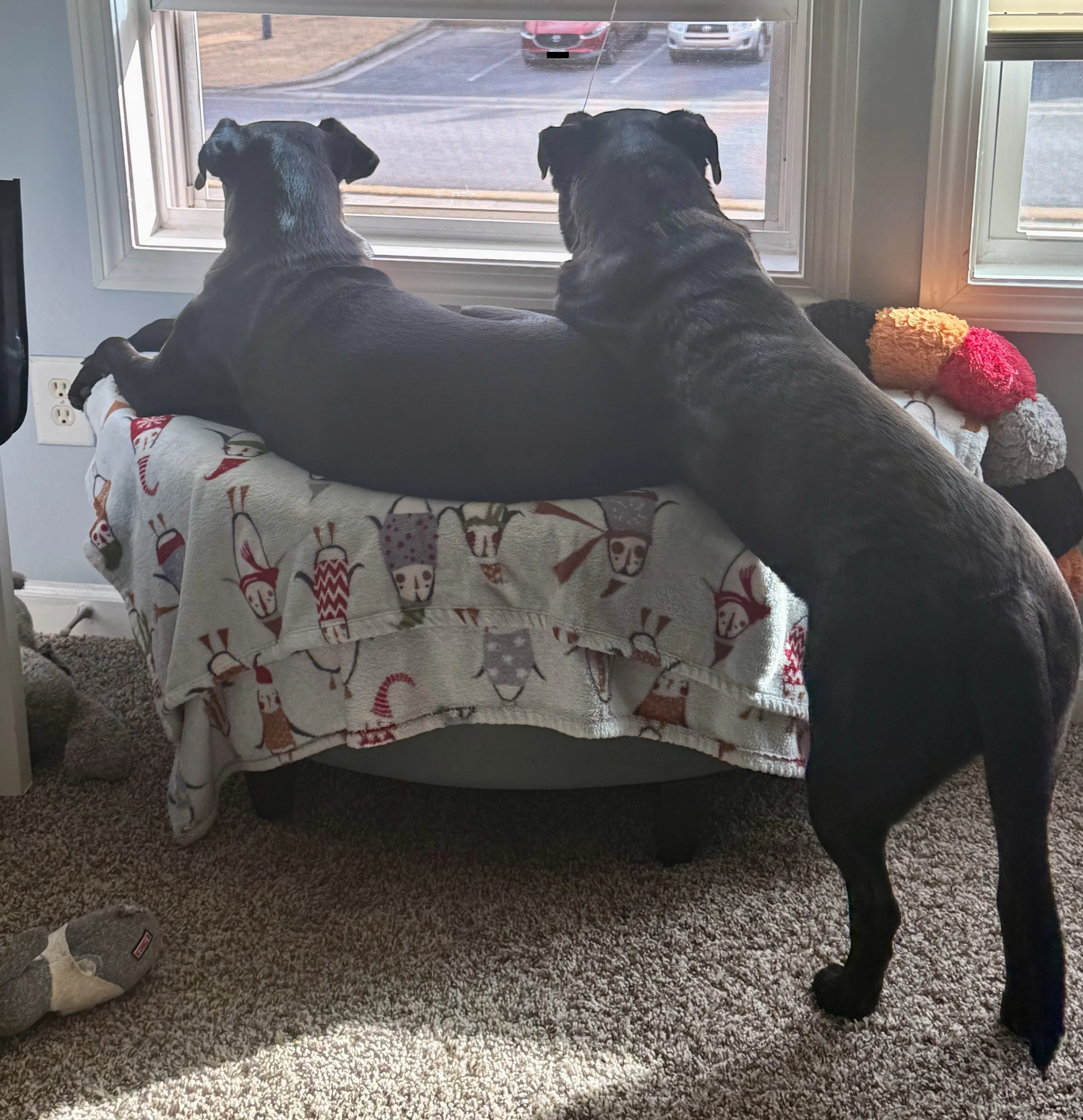
Bama (Left) Blue (Right)
References
American Animal Hospital Association. (2022). 2022 AAHA canine vaccination guidelines.
Companion Animal Parasite Council. (2025). General guidelines for dogs and cats.
Merck Veterinary Manual. (2024). Hip dysplasia (Dog Owners).
Merck Veterinary Manual. (n.d.). Canine atopic dermatitis.
Merck Veterinary Manual. (n.d.). Hypothyroidism in dogs.
World Small Animal Veterinary Association. (n.d.). Global nutrition guidelines.
Poston, T. R. (1935, January). Augusta Savage. Metropolitan Magazine.